RESEARCH
My research focuses on bridging the gap between different ways of knowing—specifically aligning technoscientific frameworks with local and Indigenous knowledge systems. Key areas of focus include:
Biocultural & Agricultural Values: Translating the value of traditional ecological knowledge (TEK) and heritage seed systems into policy frameworks that challenge standard industrial agricultural practices.
Policy & Infrastructure Critiques: Evaluating international development frameworks—such as critique of the UN Sustainable Development Goals (Poole, 2019)—for overlooking local culture and ecological values in sustainability planning.
Socio-Technical Systems: Examining how energy infrastructure, urban technology, and global policy impact local community resilience and ecological flourishing.
Teaching & Curricular Scope
In the classroom, I emphasize plural epistemologies and applied ethics. My courses cover food ethics, energy and urban sustainability, animal ethics, philosophy of technology, and the deep relationships between linguistic diversity, cultural heritage, and ecological knowledge..
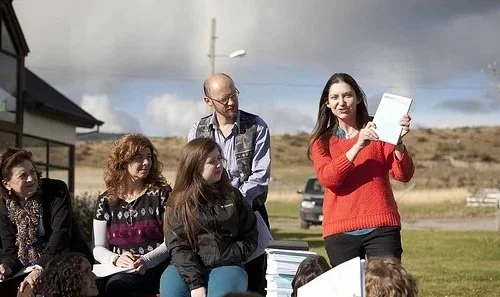
I am a long-term collaborator with the Sub-Antarctic Biocultural Conservation Program located in Southern Chile, the Center for Environmental Philosophy based out of the University of North Texas.
CONSORTIUM & ADVISORY ROLES
I participate in and advise on major multi-stakeholder European initiatives exploring the ethical governance, societal impact, and evaluation of complex technologies and environmental systems:
RESONATE (Horizon Europe Project):
Member of the International Expert Advisory Board, providing strategic guidance on sustainability, equity, and responsible governance across a portfolio dedicated to building resilience in coastal and urban communities.
LLMs4EU (EU Initiative):
Research participant in ethical governance and participatory evaluation for a major European consortium developing open, sovereign, and trustworthy Large Language Models. The LLMs4EU project, coordinated by the Alliance for Language Technologies (ALT-EDIC), aims to preserve European linguistic and cultural diversity in the digital age through cooperation between economic and academic actors.
ELSA Lab (Ethical, Legal & Societal Aspects of AI):
Contributing researcher in a collaborative ecosystem examining the societal impacts of AI. I focus on participatory evaluation methods and co-design frameworks to ensure emerging technologies account for community values and environmental sustainability.
publications
White, Mathew P., Julia AM Egger, Giulia Amato, Thomas Astell-Burt, Stine Bekke-Hansen, Angel Borja, Angel Burov… Poole, A., et al. "Testing nature-based biopsychosocial resilience theory: a research programme protocol." Archives of Public Health 84, no. 1 (2026): 90.
Poole, A. K. "Education as a driver of extinction of experience or conservation of biocultural heritage." In Field environmental philosophy: education for biocultural conservation, pp. 247-262. Cham: Springer International Publishing, 2023.
Tauro, A, J. Ojeda, T. Caviness, K. P. Moses, R. Moreno-Terrazas, T. Wright, D. Zhu, A. K. Poole, F. Massardo, and R. Rozzi. "Field Environmental Philosophy: A Biocultural Ethic Approach to Education and Ecotourism for Sustainability." Sustainability 13, no. 8 (2020): 4526.
Rozzi, R., F. Massardo and A. Poole. “The “3Hs” of the Biocultural Ethic: A ‘Philosophical Lens’ to Address Global Changes in the Anthropocene.” In Luca Valera and Juan Carlos Castilla, eds. Global Changes: Ethics, Politics and Environment in the Contemporary Technological World. Springer: 2020: 153-170.
Poole, A. “Environmental Philosophy and the City,” Meagher, Sharon M., Samantha Noll, and Joseph S. Biehl. The Routledge Handbook of Philosophy of the City. Routledge, 2019. Invited Chapter. pp. 335-352.
Poole, A. “The U.N. Sustainable Development Goals and the Biocultural Heritage Lacuna: Where is Goal Number 18?,” Volume 3: Ecology and Ethics Series, eds. R. Rozzi, S.T.A. Pickett, C. Palmer, J.J. Armesto, J.B. Callicott. Netherlands: Springer, Invited Book Chapter., (October 2018).
Poole, A. “Where is Goal #18? The Need for Biocultural Heritage within the UN Sustainable Development Goals,” Environmental Values, Volume 27, Number 1, February 2018, pp. 55-80(26)
McHale, Melissa R.; Steward T.A. Pickett, Olga Barbosa, David N Bunn, Mary L. Cadenasso, Dan L. Childers, Meredith Gartin, George Hess, David M. Iwaniec, Timon McPhearson, M. Nils Peterson, Alexandria K. Poole, Louie Rivers III, Shade T. Shutters. “The New Global Urban Realm: Complex, Connected, Diffuse, and Diverse Social-Ecological Systems.” Sustainability 7(2015), no. 5: 5211-5240.
Poole, A., E. C. Hargrove, P. Day, W. Forbes, G. Potter, A. R. Berkowitz, P. Feinsinger, R. Rozzi. (2014) “A Call For Ethics Literacy in Environmental Education.” In Linking Ecology and Ethics for a Changing World, eds. R. Rozzi, S.T.A. Pickett, C. Palmer, J.J. Armesto, J.B. Callicott. Netherlands: Springer. 349-371.
Rozzi, R., J.J. Armesto, J. Gutiérrez, F. Massardo, G. Likens, C.B. Anderson, A. Poole, K. Moses, G. Hargrove, A. Mansilla, J.H. Kennedy, M. Willson, K. Jax, C. Jones, J.B. Callicott & M.T. Kalin. (2012) “Integrating ecology and environmental ethics: Earth stewardship in the southern end of the Americas.” BioScience 62, no. 3: 226-236.
Rozzi, R. & A. Poole. (2011). Habitats-habits-inhabitants: a biocultural triad to promote sustainable cultures. In Sustainable Development: Relationships to Knowledge, Ethics and Culture, eds. Oliver Parodi, Ignacio Ayestaran & Gerhard Banse, Karlsruher Studien Technik und Kultur Seroes, Kalsruher Institut für Technologie, Kalsruhe, Germany. pp. 53-74.
Callicott, J. B; J. Parker, J. Batson, N. Bell, K. Brown, S. Moss, A. Poole and J. Woodling. (2011). “The Other in A Sand County Almanac: Aldo Leopold’s Animals and His Wild-Animal Ethic.” Environmental Ethics 33, no. 2: 115-146.
Rodrigo, E. A.; D. A. Sotomayor, A. Poole & J. C. Pizarro (2010). “Creating a new cadre of academics capable of integrating socio-ecological approach to conservation biology.” Revista Chilena de Historia Natural 83, no. 1: 17-25.
Rodrigo, E. A.; D. A. Sotomayor, A. Poole & J. C. Pizarro, (2010). “Formando una nueva generación de investigadores capaces de integrar los aspectos socio-ecológicos en conservación biológica.” Revista Chilena de Historia Natural 83, no. 1: 17-25.
Rozzi, R., C.B. Anderson, J.C. Pizarro, F. Massardo, Y. Medina, A. Mansilla, J.H. Kennedy, J. Ojeda, T. Contador, V. Morales, K. Moses, A. Poole. J.J. Armesto. M.T. Kalin. (2010). “Field environmental philosophy and biocultural conservation at the Omora Ethnobotanical Park: Methodological approaches to broaden the ways of integrating the social component (“S”) in Long-Term Socio-Ecological Research (LTSER) sites.” Revista Chilena de Historia Natural 83, no. 1: 27-68.
Rozzi, R., C.B. Anderson, J.C. Pizarro, F. Massardo, Y. Medina, A. Mansilla, J.H. Kennedy, J. Ojeda, T. Contador, V. Morales, K. Moses, A. Poole. J.J. Armesto. M.T. Kalin. (2010). “Filosofía ambiental de campo y conservación biocultural en el Parque Etnobotánico Omora: aproximaciones metodológicas para ampliar los modos de integrar el componente social (“s”) en Sitios de Estudios Socio-Ecológicos a Largo Plazo(SESELP).” Revista Chilena de Historia Natural 83, no. 1: 27-68.
Rozzi, R. & A. Poole (2008). “Biocultural and Linguistic Diversity.” In Encyclopedia of Environmental Ethics and Philosophy, eds. B. Callicott & R. Frodeman. MacMillan Reference Book. Farmington Hills, Michigan: Gale, Cengage Learning. Volume 1. pp. 100-104.
Anderson, C.B., G.E. Likens, R. Rozzi, J.R. Gutiérrez, J.J. Armesto & A. Poole (2008). “Integrating Science and Society through Long-Term Socio-Ecological Research.” Environmental Ethics 30, no. 3: 295-312.
Anderson, C.B., G.E. Likens, R. Rozzi, J.R. Gutiérrez, J.J. Armesto & A. Poole (2008). “Integrando la ciencia y la sociedad a través de la investigación socio-ecológica a largo plazo.” Environmental Ethics 30, no. S3: 81-100.